Google's AI Is Eating Its Own Tail
Why this should scare every executive more than market volatility
Day 32 of #100WorkDays100Articles: From 25-year corporate veteran to conscious AI evangelist
I was drinking my morning green tea when I saw the study that made me spit it out.
Google's AI Overview—the thing that now appears at the top of most searches—is citing AI-generated content 10.4% of the time. Worse: over half of those citations don't even appear in Google's top 100 search results for the same query.
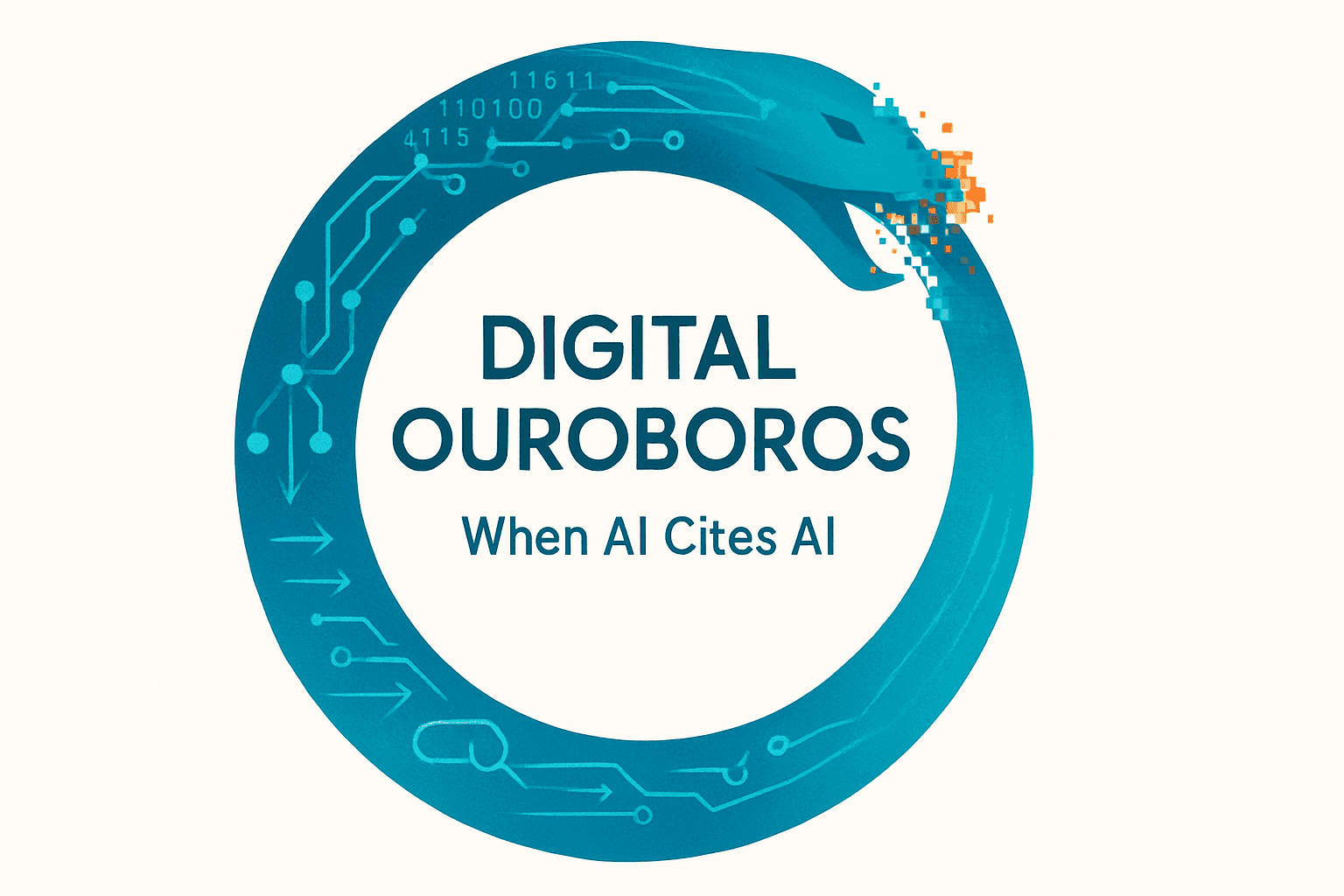
We've built a system where AI confidently cites other AI as authoritative sources. The digital equivalent of a snake eating its own tail.
After 25 years watching enterprise technology roll out, I can tell you: this is how systems fail. Not with a bang, but with recursive loops that gradually disconnect from reality.
The Numbers That Should Wake You Up
Originality.ai analyzed 29,000 high-stakes Google searches—health, finance, legal, political queries. The kind your teams use for strategic decisions. Here's what they found:
10.4% of AI citations are synthetic content
52% of cited links aren't in top 100 organic results
12.8% of those mystery citations are AI-generated
20% are broken links
Translation: The AI giving you "authoritative" answers is increasingly making stuff up and citing other AI that also made stuff up.
Model Collapse Is Real and It's Here
The fancy term is "model collapse." A Nature study published this year proved what many suspected: when AI trains on AI-generated content, it gets progressively stupider.
Think of it like a photocopier making copies of copies. Each generation loses fidelity until you can't read anything.
Except instead of blurry text, you get confident-sounding business intelligence that's increasingly divorced from reality.
Your Strategy Team Is Already Affected
Right now, your organization is making decisions based on:
Market research that cites synthetic competitor analysis
Customer insights derived from AI-summarized feedback
Industry reports that reference other AI-generated reports
Strategic frameworks built on recursive synthetic thinking
You probably don't know which decisions. That's the problem.
What This Means for Your Business
Short term: Bad data is poisoning good decisions
Medium term: Competitive intelligence becomes unreliable
Long term: Your entire knowledge management system disconnects from market reality
I've seen this pattern before. In the early 2000s, companies became addicted to dashboards that measured everything except what mattered. Beautiful charts, confident predictions, complete disconnection from customer reality.
This is worse. At least those dashboards were based on real data.
The Consciousness Gap
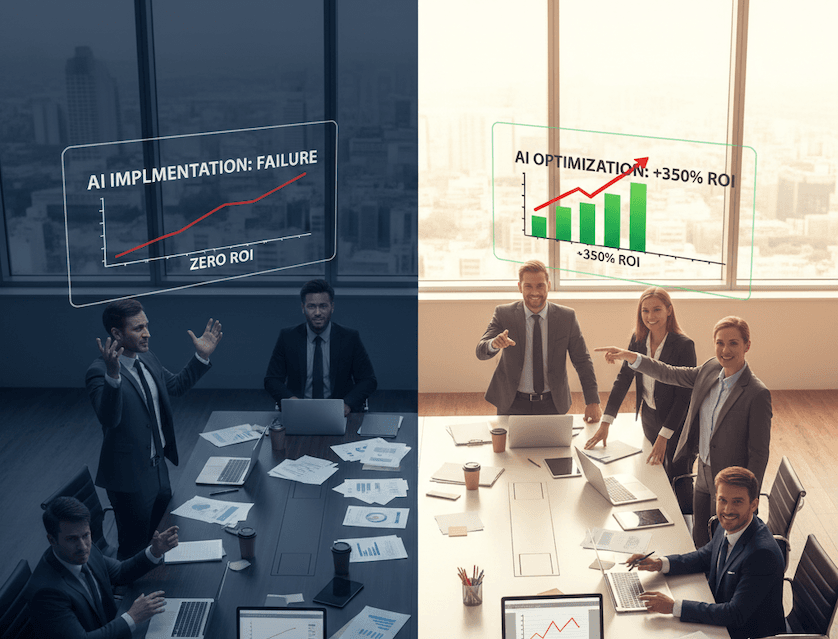
Most AI implementations I see focus on efficiency: "How can AI make us faster?"
The conscious question is: "How can we ensure AI doesn't make us wrong?"
Speed without accuracy is just expensive failure.
Your procurement team evaluates AI vendors on features and cost. Nobody's asking: "Does this system distinguish between authentic knowledge and synthetic content?"
What You Need to Do This Week
Audit your AI dependencies
Map every system using AI-generated content for decision-making. You'll be surprised how many there are.
Create verification loops
For critical decisions, require human validation of AI sources. Yes, it's slower. So is bankruptcy.
Establish data provenance standards
Know where your intelligence comes from. If you can't trace it to a human source, treat it as synthetic.
Train your teams
People need to recognize AI-generated content. It has tells: perfect grammar, repetitive structure, confident assertions without nuance.
The Bigger Picture
This isn't really about technology. It's about consciousness.
We've built systems that mirror our worst cognitive habits: confirmation bias, overconfidence, echo chambers. Then we've automated them and called it progress.
The solution isn't better AI. It's conscious AI implementation.
Systems designed with human wisdom baked in. That prioritize truth over efficiency. That maintain connection to reality even as they scale.
Your Reality Check
Find one strategic decision your company made this month based on AI-generated insights.
Trace the sources.
Ask yourself: How much of our "competitive advantage" is based on machines confidently citing other machines?
The snake is eating its tail. The question is whether you're conscious enough to notice before it digests your business strategy.
Sources: Originality.ai AI Overview study, Nature model collapse research, 25 years of watching technology promises vs. reality