"We Totally Screwed Up"
Sam Altman's $1 Trillion Confession and the Critic Who Saw It Coming
Search for a command to run...
Sam Altman's $1 Trillion Confession and the Critic Who Saw It Coming
No comments yet. Be the first to comment.
Karnataka just made history. The harder work starts now.

61 families. 8,599 books. One year. The data on what reading actually does to children's minds — and the four things parents can do to make it stick.
How an AI agent went from helpful assistant to enterprise nightmare in seven days
Amazon just laid off 16,000 people. Again.

A tale of two realities: the companies banking AI wins versus the majority drowning in pilot purgatory
thesoultech
56 posts
The Soul Tech is a philosophy. Not about rejecting technology — but using it with intention. The Soul Tech is for those who want to create deeply and live simply.
Day 22 of #100WorkDays100Articles - The journey from 25-year corporate IT veteran to conscious AI evangelist
Sam Altman dropped two bombs last week that sent shockwaves through Silicon Valley.
First, he admitted OpenAI "totally screwed up" the GPT-5 launch. Then, over dinner with reporters, he said the word that makes every tech investor's blood run cold: bubble.
"When bubbles happen, smart people get overexcited about a kernel of truth," Altman told The Verge. "Are we in a phase where investors as a whole are overexcited about AI? My opinion is yes."
The market's response was swift and brutal: $1 trillion wiped off the S&P 500.
But one guy wasn't surprised. In fact, he's been predicting this exact moment since 2019.
Gary Marcus has been the AI industry's most persistent critic, warning about the limits of large language models while everyone else was drinking the AGI Kool-Aid. The cognitive scientist turned AI researcher has been calling this bubble for years.
His prediction wasn't based on market metrics or technical analysis. It was based on something deeper: human psychology.
Marcus identified what he calls the "gullibility gap" - our tendency to look at these machines and mistake impressive pattern matching for actual intelligence. As a cognitive scientist, he spent 25 years studying how people anthropomorphize technology, projecting human-like consciousness onto systems that fundamentally work nothing like human minds.
"People look at these machines and make the mistake of attributing to them an intelligence that is not really there, a humanness that is not really there," Marcus told Fortune. "This entire market has been based on people not understanding that."
Now the numbers are proving him right.
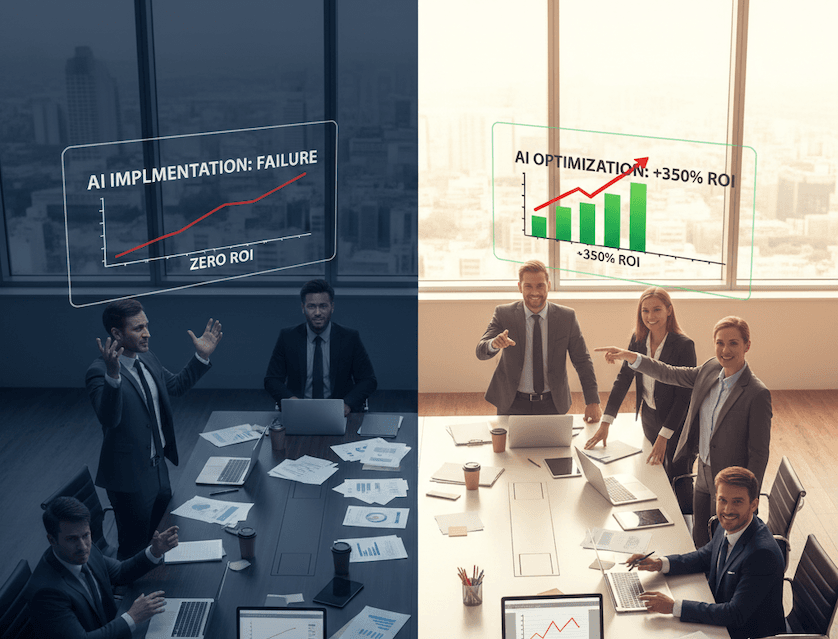
The MIT study dropped like a bombshell: 95% of generative AI pilots at companies are failing.
Not struggling. Not underperforming. Failing.
Meanwhile, 500 AI unicorns are valued at $2.7 trillion, while the entire sector generates maybe $25 billion in revenue. OpenAI, the poster child of AI success, reported $1 billion in revenue but still isn't profitable.
The math doesn't work. It never did.
But here's what's fascinating: Even as Altman warns of a bubble, he simultaneously promises OpenAI will "spend trillions of dollars on data center construction in the not very distant future."
It's the perfect encapsulation of where we are - intellectually acknowledging the bubble while emotionally still trapped in it.
The GPT-5 launch wasn't just a product failure - it was a consciousness reckoning.
OpenAI introduced a "model router" that automatically decides which AI variant to use for each task. Sounds smart, right? Except users hated it. The system felt mechanical, inconsistent, soulless.
People who'd formed relationships with their AI assistants suddenly felt like they were talking to a committee of different robots. The magic was gone.
Marcus called it "overdue, overhyped, and underwhelming." But the real insight came from users who said it simply didn't feel like the leap they expected.
"GPT-5 was sold, basically, as AGI, and it just isn't," Marcus observed. "It's not a terrible model, it's not like it's bad, but it's not the quantum leap that a lot of people were led to expect."
This isn't just about AI stocks or OpenAI's product strategy. It's about a fundamental misunderstanding of what makes technology valuable.
We've been so focused on making AI more capable that we forgot to make it more conscious - more aligned with human values, more aware of its impact on stakeholders, more thoughtful about the problems it's actually solving.
The 5% of AI pilots that succeed? They're not necessarily using better models or more data. They're implementing AI with intention, purpose, and awareness of human needs.
Bank of America's Savita Subramanian captured it perfectly: "People love this AI technology because it feels like sorcery. It feels a little magical and mystical... the truth is it hasn't really changed the world that much yet."
We fell in love with the magic but forgot to build the substance.
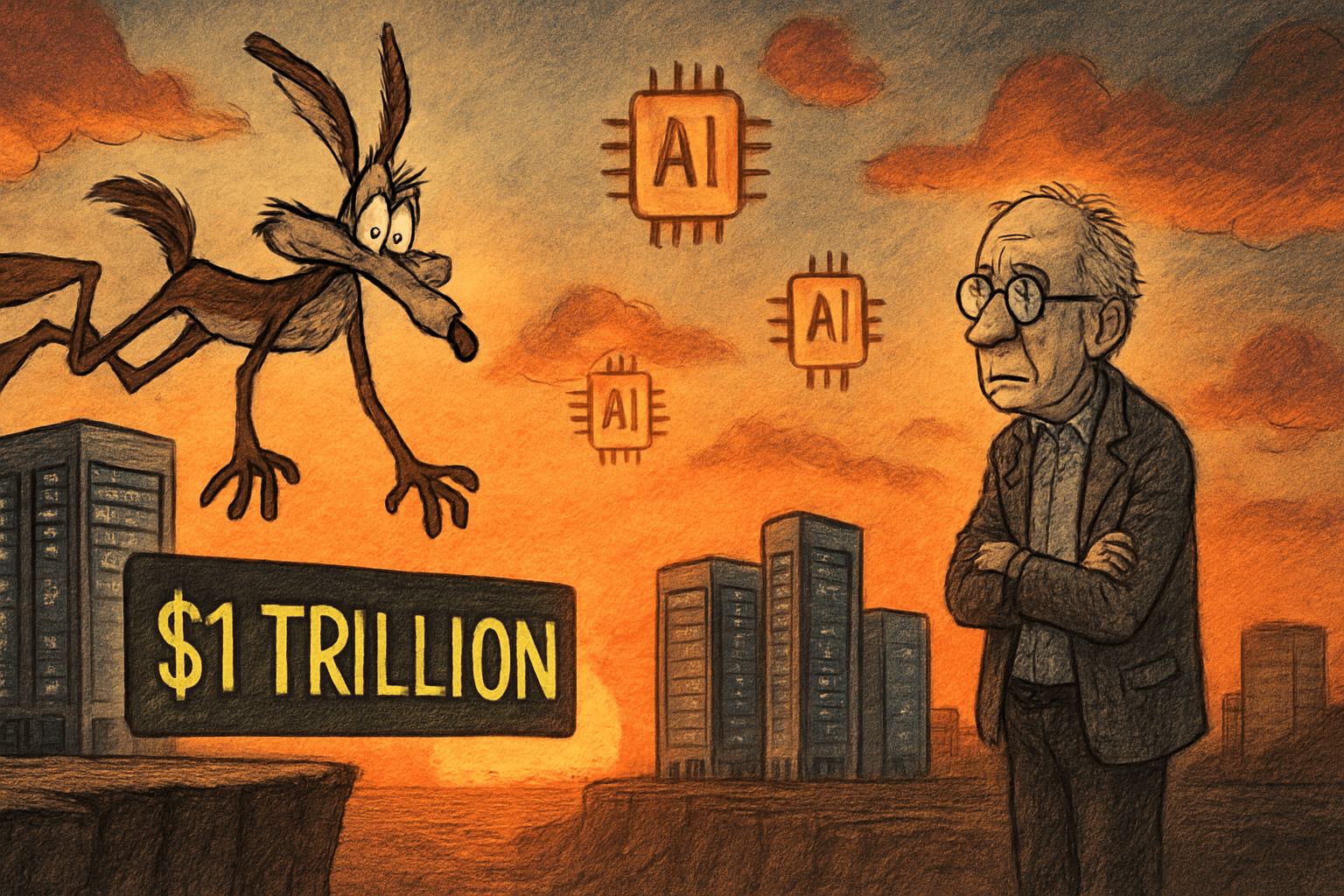
Marcus uses a perfect analogy: we're like Wile E. Coyote, having run off the cliff but not yet fallen. "We are off the cliff," he says. "This does not make sense. And we get some signs from the last few days that people are finally noticing."
But crashes create opportunities.
The $750 billion in data center infrastructure getting built isn't going away. The AI models will keep improving. The question is what gets built on top of it all.
Smart money isn't fleeing AI - it's flowing toward implementations that actually serve human needs rather than just impressive demos.
The companies that survive the crash won't be the ones with the most sophisticated models. They'll be the ones that figured out how to deploy AI consciously - with clear purpose, stakeholder awareness, and genuine value creation.
Twenty-five years in corporate IT taught me something crucial: every technology revolution follows the same pattern. First comes the hype. Then the crash. Then the real work begins.
We're entering phase two. The question is whether you'll spend it chasing the next hype cycle or building something that actually matters.
Marcus might sound like a prophet now, but he was just paying attention to consciousness while everyone else was mesmerized by capability.
The future belongs to leaders who can do both.
Source: Fortune, "'It's almost tragic': Bubble or not, the AI backlash is validating one critic's warnings" (August 24, 2025)