The Pitfalls Behind the 2025 Enterprise AI Hype
What the Data Doesn’t Show: Pressure, Inequality, and Fragility Behind Enterprise AI

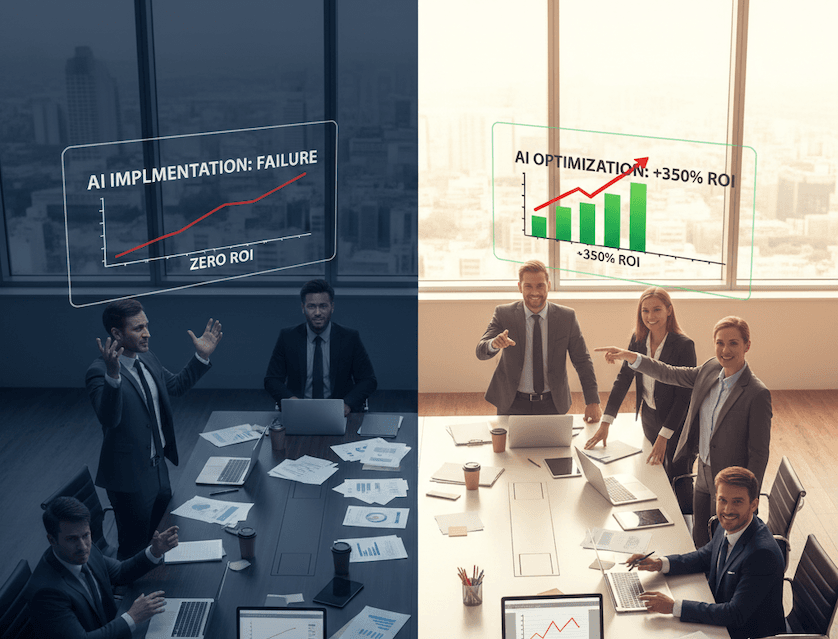
The 2025 Enterprise AI Report claims that businesses are becoming more productive, workers are saving time, and AI is being integrated successfully into operations.
But the report tells only one side of the story.
A closer look reveals structural risks, cultural distortions, and inconvenient truths about how AI is actually reshaping work.
https://openai.com/index/the-state-of-enterprise-ai-2025-report/
#100WorkDays100Articles - Article 40
1. Productivity Gains Do Not Equal Better Performance
The report highlights “40–60 minutes saved per day,” but it assumes that all saved time becomes productive output.
In reality:
Time saved often becomes extra workload.
Managers increase expectations.
Teams feel pressure to deliver at AI speed.
Burnout rises even as efficiency increases.
Productivity gains do not automatically translate into business outcomes.
They often translate into higher pressure and unrealistic baselines.
2. AI Adoption Is Often Compliance, Not Choice
Rising usage metrics look impressive, but AI adoption in large organizations is rarely voluntary.
Employees adopt AI because:
It is integrated into mandatory systems.
Colleagues using AI deliver faster, raising the bar.
Managers expect AI involvement in all tasks.
Not using AI is perceived as inefficiency.
This is not innovation-led adoption.
It is cultural coercion, disguised as technological progress.
3. The Data Comes From A Single Ecosystem
The report pulls insights entirely from:
OpenAI tool usage
OpenAI customer surveys
OpenAI enterprise API data
There is no:
External benchmarking
Industry-level validation
Independent comparison with non-AI teams
Real-world business impact analysis
The conclusions reflect how people use OpenAI products.
They do not show how AI transforms enterprises as a whole.
4. AI Deepens Inequality Inside Organizations
The report mentions “frontier workers” who use AI extensively.
It doesn’t address what this means long-term.
AI boosts:
The fastest workers
The most technical workers
The employees capable of automating their own tasks
Everyone else falls behind.
The gap isn’t between high and low talent.
It’s between AI-augmented and non-augmented.
This creates a structural inequality that compounds over time.
5. Integration Creates New Points of Fragility
Deep integration of AI into workflows looks efficient, but it increases dependency.
Risks include:
Outages freezing entire teams
Model hallucinations corrupting decisions
Automated pipelines failing without human oversight
Skill erosion as teams rely on AI for core tasks
Efficiency goes up.
Resilience goes down.
The report celebrates integration but does not address operational fragility.
6. Corporate Culture Is Being Reshaped — Quietly
AI changes not only workflows but also how people behave.
Common patterns include:
Reduced critical thinking due to defaulting to AI
Stagnation of skills that AI now performs
Increased speed expectations across all roles
Less originality and more template-like output
The report ignores these cultural shifts, even though they impact long-term capability.
7. AI Is Not Neutral
AI systems inherit biases from training data and amplify the structures of the organizations that deploy them.
When AI becomes the decision assistant for:
Hiring
Planning
Evaluation
Performance reviews
Bias can scale faster than humans can detect or correct it.
The report treats AI as a neutral accelerator.
It is not.
8. Efficiency Has a Hidden Cost
The report repeatedly equates efficiency with progress.
But efficiency often comes at the cost of:
Depth of work
Quality of creativity
Strategic thinking
Human judgment
Long-term learning
A workforce focused mainly on speed becomes more productive in the short term.
But it becomes less capable in the long term.
Conclusion
The 2025 Enterprise AI Report tells a positive story about adoption, productivity, and integration.
But beneath the surface are risks the report does not address:
AI-driven pressure
Cultural conformity
Inequality between workers
Organizational fragility
Skill erosion
Bias amplification
AI will transform enterprises.
However, this transformation will not always be positive.
The real challenge is not adopting AI quickly.
It is adopting AI responsibly, without breaking the systems and people who rely on it.
Day # 40 of #100WorkDays100Articles. Currently pursuing my GenAI doctorate, reimagining Bukmuk experience and being conscious about AI.